
Braces or Invisalign can help TMJ pain when a misaligned bite strains the jaw joints. They do not cure every case, because clenching, injury, arthritis and stress also cause TMD. An evaluation shows whether orthodontics belongs in your plan.
Jaw pain, clicking and morning headaches send a lot of people searching for answers, and many of them wonder whether straightening their teeth would fix it. Some also worry the opposite: that braces caused their jaw trouble. Here is what the connection really looks like and how an orthodontist sorts it out.
What Is TMJ Disorder?
Your temporomandibular joints are the two small hinges just in front of your ears that connect the lower jaw to the skull. They work every time you talk, chew, swallow or yawn. When those joints or the muscles around them become inflamed, overworked or out of balance, the condition is called temporomandibular disorder, usually shortened to TMD or simply TMJ.
Common symptoms include pain in the jaw area, clicking or popping when the jaw moves, frequent headaches or neck aches, muscle spasms, ringing or stuffiness in the ears, a change in how the upper and lower teeth fit together, and a jaw that locks or will not open fully. Symptoms can be mild or severe, and they often come and go over time.
What Causes TMJ Pain in the First Place?
TMD rarely has a single cause. The most common contributors are:
- Jaw misalignment: an improper bite or uneven contact between the teeth.
- Clenching or grinding: often linked to stress or sleep-related bruxism.
- Injury or trauma: a direct blow to the jaw or head.
- Arthritis: degenerative changes inside the joint that affect movement.
- Stress: tension in the face and neck muscles that keeps the jaw working when it should rest.
Only the first item on that list is something braces or aligners address directly. That is the key to understanding when orthodontic treatment helps and when it does not.
Can Braces or Invisalign Actually Fix TMJ?
They can help when the bite is a real part of the problem. If your teeth do not meet evenly, the jaw muscles have to work harder to find a comfortable closing position every time you bite. Over months and years that extra effort can feed joint and muscle pain. Correcting the bite with braces or aligners gives the jaw a stable, even place to close, which can reduce that strain.
Orthodontic treatment is one of the TMJ options offered at Larson Orthodontics for exactly this reason: braces or aligners are used to correct bite imbalances that contribute to TMD. Bites like a deep overbite, a crossbite or uneven contact on one side are the kinds of problems worth evaluating, and our post on overbite versus overjet explains how those bite patterns differ.
What braces cannot do is undo grinding driven by stress, repair arthritic changes inside the joint or reverse the effects of an injury on their own. When those are the main drivers, straightening teeth may improve the bite without touching the pain. That is why the evaluation comes before any decision about treatment.
Do Braces Cause TMJ Problems?
This is one of the most common worries, and the short answer is that braces are not considered a usual cause of TMD. Many people develop TMD without ever having braces, and symptoms tend to wax and wane whether or not braces are worn.
It is normal to feel tenderness for a few days after braces go on or after an adjustment, because teeth are being moved and the bite is changing. That soreness comes from the teeth and supporting tissue, not the jaw joint, and it settles as you adapt. Our article on what happens at a braces adjustment appointment describes what that pressure usually feels like.
If you notice jaw pain, clicking or limited opening at any point during treatment, mention it at your next visit. Your orthodontist can look at whether the bite is passing through a temporary stage or whether something else is going on.
What If Jaw Pain Starts After Braces Come Off?
Jaw symptoms can show up at any age, including after orthodontic treatment has ended. Because TMD has so many possible causes, new pain after braces is not automatically a sign that the treatment went wrong. Stress, a new clenching or grinding habit, or an injury can all trigger symptoms in a mouth that was straightened years earlier.
The first step is the same as for anyone with jaw pain: an evaluation of the bite, the joints and the muscles. If teeth have shifted because a retainer was not worn, the bite may no longer meet the way it did at the end of treatment, and that is worth checking. If the bite is still stable, the answer may be a nightguard, jaw exercises or habit changes rather than more orthodontics.
How Do Orthodontic and Other TMJ Treatments Compare?
Most TMJ care is conservative and non-surgical. Here is how the main options line up.
| Treatment | What it targets | Typical timeline |
|---|---|---|
| Custom nightguard | Grinding and jaw tension during sleep | Some people notice improvement within weeks |
| Braces or Invisalign | A misaligned bite that strains the joints | Longer, since teeth move gradually |
| Bite adjustment | Small high spots that keep the bite uneven | Varies with the bite |
| Jaw exercises | Muscle tightness and limited movement | Ongoing home routine |
| Lifestyle and stress counseling | Clenching habits and posture-related strain | Ongoing |
| Referral to a specialist | Advanced cases needing surgical or interdisciplinary care | Depends on the case |
These options are often combined. A nightguard can ease symptoms while an orthodontic plan corrects the bite underneath them, for example.
How Does an Orthodontist Evaluate Jaw Pain?
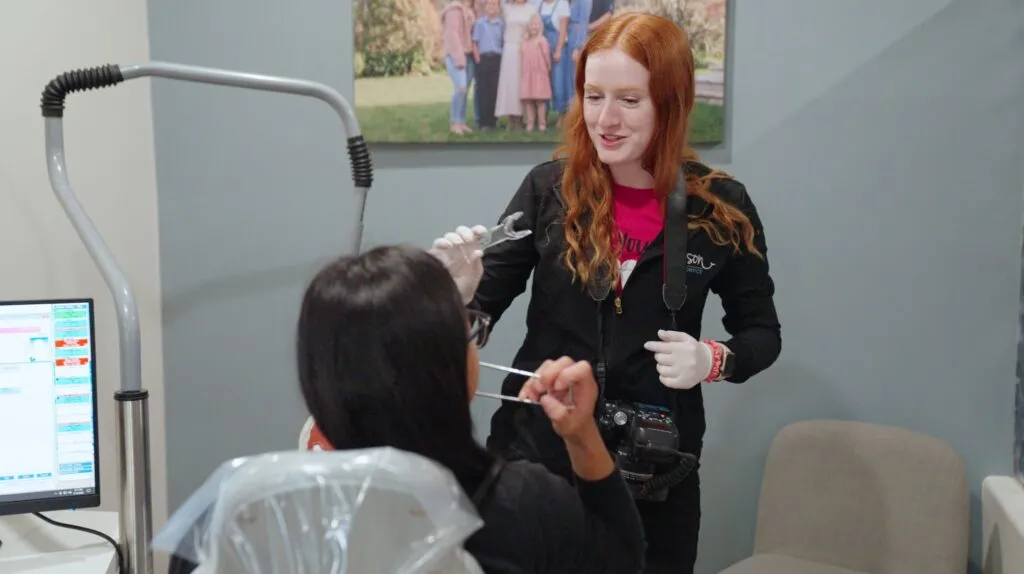
Diagnosing TMD is more involved than spotting a cavity, so the evaluation is step by step. At Larson Orthodontics it may include a review of your medical and dental history, a clinical exam of your bite, jaw and facial muscles, imaging such as panoramic X-rays or CBCT scans, and observation of how your jaw moves, the sounds the joints make and how your teeth line up.
Dr. Marc Larson describes looking at the jaw joints and airways, not just the teeth, when he builds a treatment plan. You can read more in his doctor profile. That whole-picture view is what separates a bite problem orthodontics can solve from jaw pain that needs a different approach.
What Can You Do About Jaw Pain at Home?
Simple habits can take pressure off sore joints while you wait for an evaluation:
- Relax your face with lips together and teeth apart.
- Avoid gum chewing and try not to grind your teeth.
- Chew food evenly on both sides of your mouth.
- Do not rest your chin on your hand or cradle a phone between your head and shoulder.
- Keep good posture with your head up and shoulders squared.
These steps will not correct a bite, but they often reduce day-to-day strain and help you notice what makes symptoms worse.
Frequently Asked Questions
Can Invisalign help TMJ as well as braces?
Yes, when the bite is a contributing factor. Both braces and aligners can correct bite imbalances that strain the jaw. The right choice depends on your bite, and adults can compare options on our Invisalign for adults page.
How long does it take for TMJ pain to improve?
It depends on the cause. A nightguard may bring noticeable relief within weeks, while orthodontic bite correction takes longer because teeth move gradually.
Is TMJ treatment covered by insurance?
Coverage varies by plan and by the type of care. The practice accepts all PPO plans and can help verify your benefits, as explained on our financial information page.
Should I see an orthodontist or a dentist for jaw pain?
Either can be a good first stop. An orthodontist is especially helpful when the bite or jaw alignment may be involved, since correcting it is what orthodontic treatment does.
Get Answers About Jaw Pain at Larson Orthodontics
If clicking, jaw pain or headaches are wearing on you, an evaluation can show whether your bite is part of the picture. Learn more about TMJ treatment in Riverside or request a free consult at either office. You can also call (951) 686-6410.