
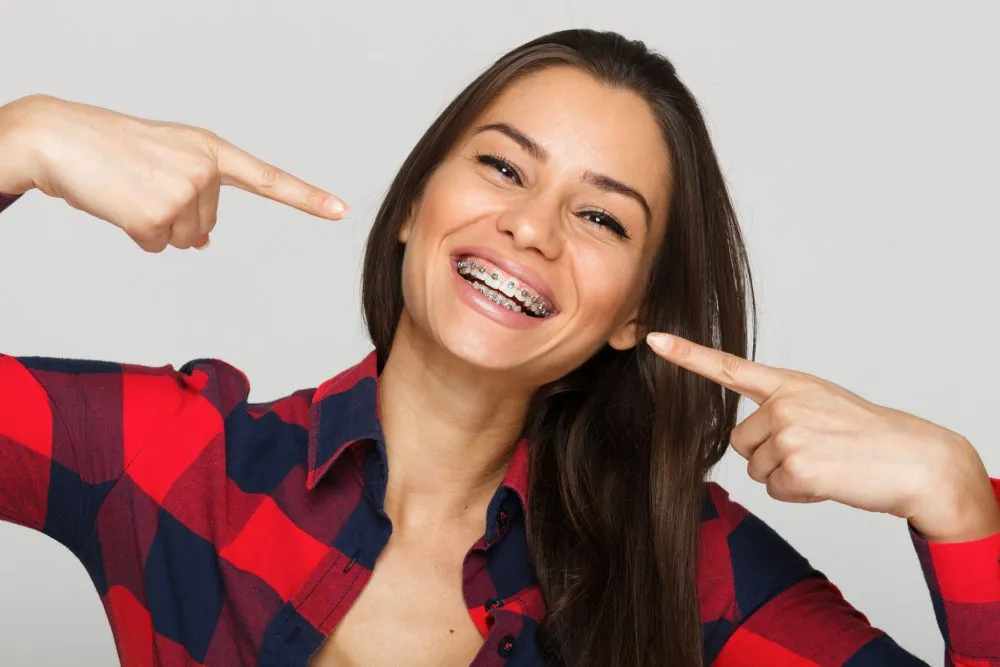
Orthodontic treatment works after 40, but it works differently. Adult bone remodels more slowly, so treatment often takes somewhat longer, and existing dental work, gum health, and worn teeth all factor into the plan. Both braces and clear aligners are effective; the deciding factors are your bite and your dental history, not your age. Adults in the Corona area can read more about clear aligner therapy in Corona.
Teeth do not have an expiration date for movement. What changes after 40 is the context around them, and a good treatment plan accounts for that context instead of ignoring it.
What Actually Changes After 40
Bone Remodels More Slowly
Tooth movement depends on bone dissolving ahead of a tooth and rebuilding behind it. That cell turnover is slower in adults than in teenagers, which is why an equivalent case can take a few months longer. Slower is not the same as impossible.
Growth Is No Longer a Tool
In children, an orthodontist can guide jaw growth to correct a bite. In adults, jaw position is set. Significant skeletal discrepancies are handled by moving teeth to compensate, or in some cases with surgical options, rather than by growth modification.
Gum and Bone Health Take Priority
Any history of gum disease or bone loss must be evaluated and stabilized first. Moving teeth through compromised bone can accelerate that loss. Once controlled, orthodontics often improves long-term periodontal health by eliminating the crowding that makes cleaning difficult.
Existing Dental Work Enters the Plan
Crowns, bridges, implants, veneers, and missing teeth all change how a case is designed. Implants cannot move at all; bridges usually cannot move as a unit. This is planning work, not a barrier.
Wear and Shifting Have Been Accumulating
Decades of chewing on a misaligned bite show up as flattened edges, chipping, notching near the gumline, and teeth that have drifted since a previous round of orthodontics ended. Many adults over 40 in Riverside and Corona come in specifically because teeth relapsed after retainers were abandoned years ago.
Braces vs. Clear Aligners After 40
| Braces | Clear aligners | |
|---|---|---|
| Visibility | Visible; ceramic options reduce it | Nearly invisible |
| Depends on your discipline | Little — they are fixed on | Heavily — 20 to 22 hours daily |
| Complex root movement | Strongest control | Good, with attachments and refinements |
| Extensive crown or veneer work | Bonding to porcelain is less reliable | Often preferred; avoids bonding brackets |
| Professional and social life | Always on; no wear-time tracking | Removable for presentations and events |
| Hygiene during treatment | Harder; brackets trap plaque | Easier; trays come out to brush and floss |
For adults with gum concerns, the hygiene difference matters more than it does for a teenager. For adults with complex bite problems, control matters more. That tradeoff is the actual conversation to have at a consultation.
How Long Does Treatment Take After 40?
Most adult cases run roughly 12 to 30 months, depending on complexity. Minor crowding or relapse from an old case can finish considerably faster. A bite correction involving multiple arches will sit at the longer end. Anyone quoting you a duration before seeing X-rays is guessing.
Why Adults Over 40 Pursue Treatment
- Relapse after braces in their teens, once retainers stopped
- Crowding that makes flossing genuinely impractical
- Uneven wear, chipping, or a tooth that keeps fracturing
- Preparing for restorative work — uprighting teeth so a crown or implant can be done correctly
- Wanting it done before it gets harder, which is a legitimate reason on its own
The Health Case for Treatment After 40
Adults rarely walk in asking for a prettier smile alone. The reasons that actually drive treatment in this age group are functional, and they compound with time.
- Hygiene access. Crowded and overlapped teeth are genuinely hard to clean, and the areas you cannot reach are where decay and gum inflammation start. Aligning teeth makes daily hygiene effective rather than aspirational.
- Uneven wear. A bite that does not meet evenly concentrates force on a few teeth. Over decades that shows up as flattened cusps, chipped edges, and notching at the gumline.
- Cracked and failing teeth. The tooth that keeps fracturing is often the tooth absorbing more force than its neighbors.
- Gum recession. Teeth positioned outside the bone’s support are more prone to recession, and repositioning them can improve the long-term outlook.
- Restorative preparation. Uprighting a tipped molar or opening a collapsed space is often what makes a good crown, bridge, or implant possible.
- Jaw comfort. Not every jaw symptom is bite-related, but some are, and a proper evaluation separates the two.
Relapse: The Most Common Adult Case We See
A large share of patients over 40 had braces once, stopped wearing retainers within a year or two, and watched the lower front teeth crowd back over the following decades. This is not a failure of the original treatment. It is what teeth do when nothing holds them.
The good news: relapse cases are frequently the shortest and least expensive treatment in an orthodontic practice, sometimes finishing in six to nine months. The bad news: relapse continues if you keep waiting, and a case that was minor at 42 can be comprehensive at 55.
Cost and Insurance for Adults Over 40
| Item | What to expect |
|---|---|
| Comprehensive treatment fee | Generally $3,000 to $8,000 depending on complexity and appliance |
| Limited or relapse treatment | Often substantially less; ask specifically about limited treatment |
| Insurance | Many adult plans include orthodontic benefits with a lifetime maximum; some have age cutoffs |
| HSA / FSA | Orthodontic treatment is typically an eligible expense |
| Payment plans | Monthly in-office plans are standard; confirm any financing charge |
Confirm what the fee includes: records, all visits, refinements, and retainers. For a fuller breakdown see our guide to orthodontic costs in Corona, CA.
What Treatment Feels Like as an Adult
Discomfort
Adults report pressure and soreness for one to three days after each adjustment or tray change, similar to teenagers. Many adults find it easier than expected, in part because they understand what is happening.
Speech and Appearance at Work
Aligners cause a mild lisp for the first few days for some patients, which resolves as the tongue adapts. Ceramic braces are a middle option when fixed appliances are clinically preferable but visibility is a concern.
Time Commitment
Expect a visit every 6 to 10 weeks, generally 20 to 40 minutes. Aligner patients often have longer intervals between visits, which is a genuine advantage for people with inflexible schedules.
Preparing for a Successful Adult Case
- Get a cleaning and a periodontal check first. Stable gums are the prerequisite, not an optional extra.
- Complete urgent restorative work. Active decay should be treated before appliances go on.
- Disclose all dental history. Crowns, implants, veneers, root canals, and old bonded retainers all shape the plan.
- Decide who owns the restorative endgame. If crowns or veneers are planned afterward, your orthodontist and dentist should agree on the target before you start.
- Commit to retention up front. The result you pay for is only as durable as your retainer habit.
When to Consider Waiting
There are legitimate reasons to delay: uncontrolled gum disease, extensive untreated decay, a restorative plan that has not been decided, or a medical condition affecting bone metabolism that your physician should weigh in on. Delaying for those reasons is planning. Delaying because you assume 40 is too late is not.
Treatment Options Adults Over 40 Should Know About
Clear Aligners
Removable trays worn 20 to 22 hours a day. Best fit for adults who want minimal visibility, have crown or veneer work that complicates bonding, or need easy hygiene access. The tradeoff is that results depend entirely on wear discipline.
Ceramic Braces
Fixed brackets in a tooth-colored ceramic. You get the control of braces with a much lower profile than metal. They are slightly bulkier than metal brackets and the ties can pick up stain from coffee, tea, and red wine between visits.
Metal Braces
Still the most versatile appliance available, and the most economical. For complex root movement, significant bite correction, or cases where the patient would rather not manage wear time, they remain the most predictable option.
Lingual Braces
Brackets bonded to the back of the teeth, invisible from the front. They require a specific technique and a longer adaptation period for the tongue, and are not offered everywhere.
Limited Treatment
A short, targeted case addressing a defined problem — usually lower front crowding from relapse. Often 4 to 9 months. Worth asking about explicitly, because it is the option most adults do not know exists.
Orthodontics Combined With Surgery
For adults with significant skeletal discrepancies, orthodontics may be paired with orthognathic surgery. This is uncommon, discussed only when jaw position rather than tooth position is the actual problem, and always presented alongside non-surgical compromises.
Retention After 40: Where Adult Cases Are Won or Lost
Adults have watched their teeth move once already, which makes this the most important section of the plan. Two retainer types, often used together:
| Type | How it works | Considerations |
|---|---|---|
| Removable clear retainer | Tray worn nights, indefinitely | Easy, replaceable, must actually be worn; needs replacement every few years |
| Bonded wire retainer | Thin wire bonded behind the front teeth | Always working; requires careful flossing and periodic checks for debonding |
The honest framing: retention is not the end of treatment, it is the maintenance phase of a permanent change. Adults who treat their retainer like a night guard keep their results. Adults who treat it like a temporary phase come back in ten years.
Realistic Expectations
- Teeth can be straightened at any adult age; jaw shape cannot be changed without surgery.
- Gum recession that already exists will not reverse. Alignment can reduce further risk, not undo past loss.
- Worn or chipped edges usually need restorative finishing after alignment for the best cosmetic result.
- Black triangles — small gaps near the gumline between straightened teeth — are more common in adults with prior bone loss, and can often be improved with minor reshaping or bonding.
- Treatment time is measured in months, not weeks. Any promise of a fast comprehensive result deserves scrutiny.
Questions to Ask at Your Consultation
- What exactly is wrong with my bite, in plain terms?
- Which appliance would you choose for me, and why that one over the alternatives?
- Given my gum and bone condition, what forces and pace are safe?
- What will need restorative work afterward, and who does it?
- What is my total fee, and what does it include after the appliances come off?
- What is the plan if my case does not track as expected?
Six questions. If any answer is vague, get a second opinion before you commit two years.
Cost vs. Value: The Long-Term Math
Adults over 40 are usually weighing a one-time fee against decades of consequences, which is a different calculation than the one a parent makes for a teenager.
| Scenario | Typical cost | Frequency |
|---|---|---|
| Comprehensive orthodontic treatment | $3,000 to $8,000 | Once |
| Limited or relapse treatment | Substantially less | Once |
| Crown on a cracked tooth | Often $1,000 to $2,500 each | Repeats as teeth fail |
| Periodontal treatment for areas you cannot clean | Ongoing | Recurring |
| Implant to replace a lost tooth | Frequently $3,000 to $6,000 | Per tooth |
These are general market ranges, not a quote, and your restorative dentist owns those numbers. The point stands regardless of the exact figures: alignment is a one-time expense, while uneven wear and inaccessible crowding generate recurring ones.
What 12 to 18 Months Realistically Changes
- Cleanability. Floss reaches where it could not, which is the change with the largest long-term effect.
- Force distribution. A corrected bite spreads chewing load across more teeth, slowing wear on the few that were absorbing it.
- Restorative readiness. Teeth positioned so that crowns, veneers, or implants can be done conservatively.
- Appearance. Real, and a legitimate reason on its own — just rarely the only one at this age.
What it does not change: existing recession, existing enamel loss, and jaw shape. Those need separate plans, and an honest consultation will say so up front.
When Another Path Fits Better
A good specialist will sometimes tell you orthodontics is not the first move:
- Active periodontal disease — treat and stabilize first, always.
- A single chipped or worn front tooth in an otherwise well-aligned bite may be a bonding case, not an orthodontic one.
- Extensive failing restorations may mean the restorative plan should lead, with limited orthodontics used only to position specific teeth.
- Significant skeletal discrepancy where you decline surgery — a compromise plan is possible, and the tradeoffs should be spelled out before you start.
- Medical conditions affecting bone metabolism. Certain medications and conditions warrant a conversation with your physician first.
Hearing “not yet” or “not this” from an orthodontist is a sign of a specialist planning your decade, not selling you an appliance.
Frequently Asked Questions
Is 40, 50, or 60 too old for braces?
No. Adults in their sixties and beyond are treated routinely. Bone and gum health determine candidacy, not birth year.
Will treatment loosen my teeth?
Teeth feel slightly mobile while moving; that is normal and temporary. Persistent looseness after treatment points to a periodontal issue that should be evaluated.
Do adults need retainers longer?
Adults need retainers indefinitely, just like everyone else. Because adult bone stabilizes more slowly, retention discipline in the first year matters even more. Learn about retainers in Riverside, CA.
Does dental insurance cover adult orthodontics?
Some plans do, often with a lifetime maximum and sometimes with an age cutoff. Check orthodontic benefits specifically rather than assuming your general dental coverage applies.
Can I fix just my front teeth?
Sometimes, for genuinely minor cases. Be cautious: limited treatment that ignores how your back teeth meet can look better and function worse.
Weighing your options in your forties or beyond? Compare Invisalign for adults in Riverside, CA and braces in Riverside, CA, or schedule a free consultation.