
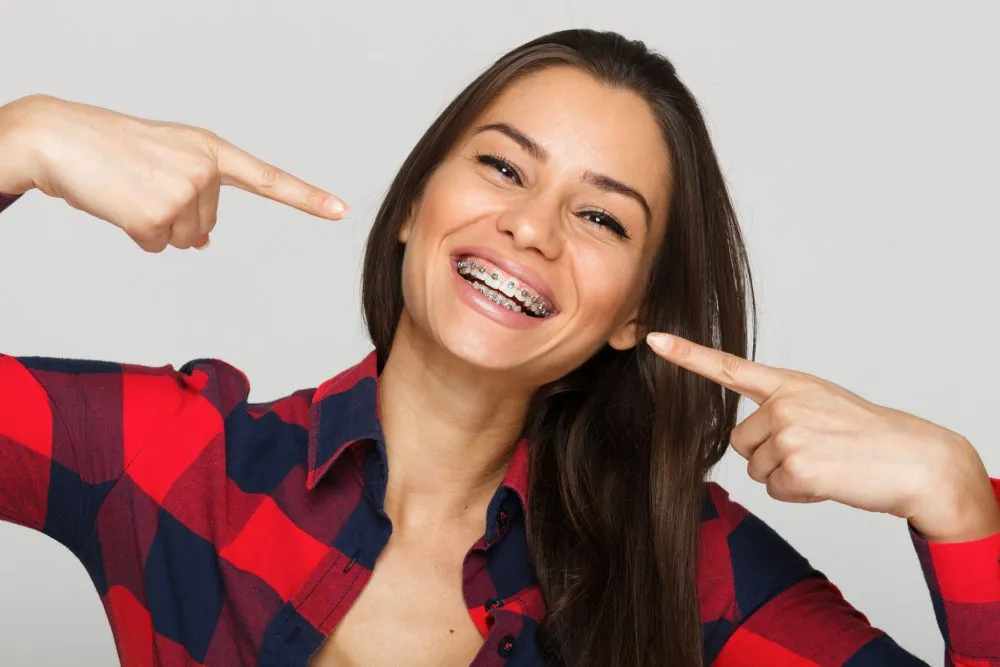
Larson Orthodontics of Corona treats patients with traditional metal braces, clear or ceramic braces, and Invisalign clear aligners for teens and adults. Every case starts with a free consultation and a digital scan of your teeth and bite, and many patients can start treatment the same day. The right appliance depends on how much your teeth need to move, how visible you want treatment to be, and how consistent you can be with wearing aligners.
If you live in Corona and you are trying to work out where to begin, this is the practical version: what we offer at the Main Street office, who each option suits, and what the first appointment actually involves.
What Treatment Options Are Available in Corona, CA?
Our Corona office offers the same treatment range as our Riverside office. Dr. Marc Larson and our team plan each case individually, but the appliances themselves fall into three groups.
| Metal braces | Clear/ceramic braces | Invisalign clear aligners | |
|---|---|---|---|
| How it works | Stainless steel brackets and archwire, fixed to the teeth | Same mechanics, tooth-colored brackets | Series of removable custom aligners, changed every 1–2 weeks |
| Visibility | Visible; color bands can be part of the fun | Blends with natural tooth color | Virtually invisible |
| Removable | No | No | Yes — for eating, drinking, and brushing |
| Best suited to | All levels of complexity, including severe crowding and bite correction | Patients who want fixed braces with a lower profile | Adults and older teens with mild to moderate concerns who will wear them 20–22 hours a day |
| Food restrictions | Yes | Yes | None, because aligners come out to eat |
Braces are still the most versatile option we have. Aligners win on appearance and convenience, but only if they are actually in your mouth. That single difference — fixed versus dependent on you — decides more cases than anything else. Details on each fixed option are on our types of braces page, and our braces in Corona, CA page covers the local specifics.
Is Invisalign a Good Fit for Adults?
For most adults with crowding, spacing, or a bite that has shifted over the years, yes. Adults have fully developed jaws and teeth, so treatment is about moving teeth rather than guiding growth, and clear aligners handle that quietly. Treatment usually runs 12 to 18 months, with some cases finishing sooner and complex ones taking longer.
The aligners are smooth, BPA-free plastic, and there is no wire to adjust, so appointments are less frequent than with braces. Patients who travel for work or spend their days in meetings tend to choose aligners for exactly that reason. Our Invisalign in Corona, CA page walks through the full process, and Invisalign for adults covers candidacy in more detail.
What About Adults Who Had Braces as Teenagers?
This is one of the more common reasons adults call us. Teeth that were straightened years ago can drift, especially if retainer wear stopped early. Relapse cases are often shorter than the original treatment, and a consultation with a scan tells you quickly whether you are looking at a few months of aligners or something more involved.
Do You Treat Teenagers With Clear Aligners?
We do. Invisalign is available for teens whose permanent teeth are largely in place, and it works well for teens who are self-conscious about brackets or who play instruments or contact sports. The trade-off is the same as for adults: the aligners have to be worn 20 to 22 hours a day, and teens with heavier crowding or bite correction often do better in braces.
We are candid at the consultation about which we think will finish faster for your child, and why. See Invisalign for teens for how treatment is structured for younger patients.
How Does the First Appointment Work?
The consultation is free, and it is a real appointment rather than a sales pitch. Here is the sequence:
- Exam and imaging. We look at your teeth, bite, and jaw relationship and take the records needed to plan treatment.
- Digital scan. A 3D scan replaces the old putty impressions and lets us map tooth movement step by step.
- Options and timeline. You hear which appliances will work for your case, roughly how long each would take, and the trade-offs between them.
- Costs and payment. You get a custom quote, we review your insurance benefits, and we explain the payment options before you commit to anything.
- Same-day start, if you want it. Many patients choose to begin treatment at that first visit rather than book a second appointment.
No referral is needed to see us. You can book at the Corona office directly.
How Do You Decide Between Braces and Aligners?
Three questions settle it for most patients.
How much movement does your case need?
Mild to moderate crowding, spacing, and minor bite issues are aligner territory. Severe crowding, significant bite correction, and cases needing elastics or extra appliances usually go faster and more predictably in braces.
How visible do you want treatment to be?
If appearance during treatment is the deciding factor, aligners come first and ceramic braces are the fixed-appliance compromise. Plenty of adults decide, once they see the timeline difference, that metal braces for a shorter stretch beats aligners for longer.
How consistent will you be?
Aligners only work while they are worn. If you know you will take them out and leave them out, braces will get you a better result. There is no judgment in that answer — it is planning.
What Does Treatment Cost in Corona?
Cost depends on how complex the case is and how long treatment runs, so we quote per patient rather than publish one number for everyone. What we can tell you up front: our practice accepts all PPO insurance, we are a Delta Dental Premier Provider and part of the Cigna Dental PPO Network, and we offer interest-free payment plans with flexible down payments alongside third-party financing. Our team files claims and handles the paperwork.
Our financial information page covers insurance and payment plans, and we break the numbers down further in the cost of orthodontic care in Corona, CA.
What Happens After Braces or Aligners Come Off?
Retention. Teeth have a memory, and the tissue around them will pull them back toward their old positions if nothing holds them. Every case we finish moves into a retention phase with retainers, and how faithfully you wear them in the first year does more to protect the result than anything else in treatment.
We go over the retainer plan before treatment ends, not after, so there is no surprise. If a retainer is lost or stops fitting, call us early — a replacement is a small problem, while months of drift is a second course of treatment.
Frequently Asked Questions
How long does orthodontic treatment take?
Most Invisalign cases run 12 to 18 months, and braces vary with the complexity of the case. Your treatment plan at the consultation includes an estimated timeline for the option you choose.
Am I too old for braces or aligners?
No. Adults make up a large share of the patients we treat, and both braces and clear aligners work on fully developed teeth. What changes with age is that skeletal jaw differences can no longer be guided by growth, so those cases are planned differently.
Can I switch from aligners to braces partway through?
It happens, usually when wear time has not been consistent or the case turns out to need more control than aligners provide. We would talk it through with you at a progress check rather than let treatment stall.
Do I need a referral from my dentist?
No. You can schedule a consultation with us directly, though we are always happy to coordinate with your general dentist during treatment.
Is the Corona office separate from Riverside?
They are two offices of the same practice, and both are staffed by our orthodontists. Patients often pick whichever location fits their commute.
Ready to see which option fits your smile? Request a free consult at our Corona office and we will map out your options at the first visit.